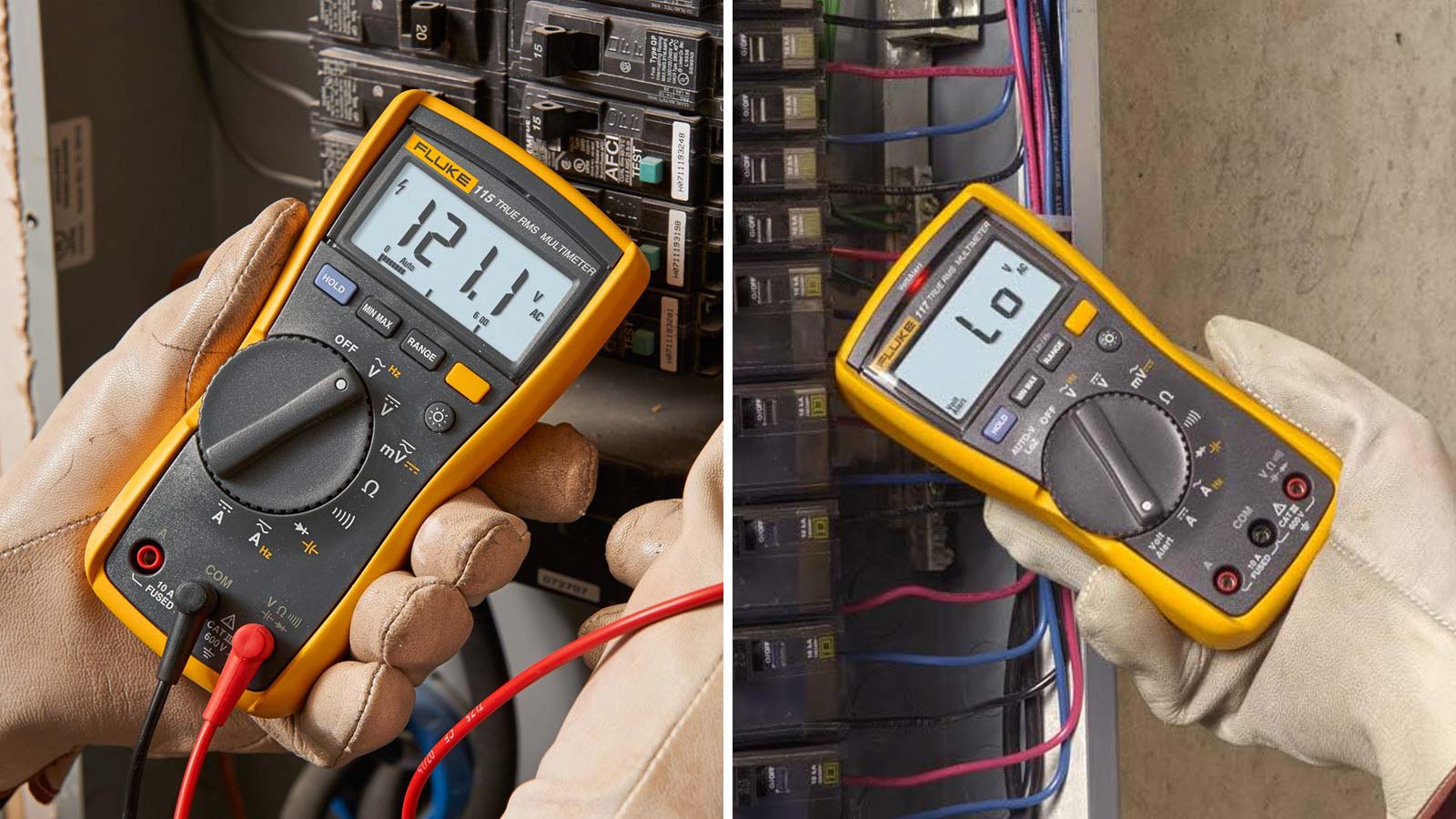
Fluke is a trusted name in multimeters, known for its durability, accuracy, and ease of use. The Fluke 115 and Fluke 117 are two popular models, both designed for reliable performance but with distinct features suited for different users.
In this comparison, we’ll highlight their key differences to help you decide which one best fits your needs—whether for general electrical work or more specialized applications.
Fluke 115
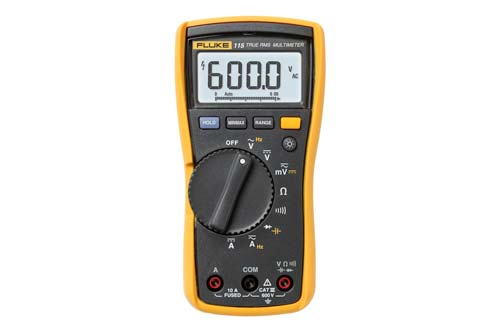
A reliable, all-purpose multimeter with True RMS, auto-ranging, and essential functions, ideal for field technicians and general electrical work.
Fluke 117
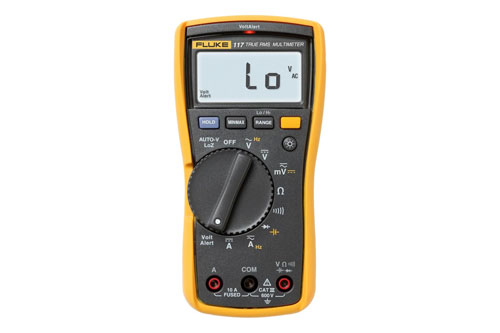
Designed for electricians, it features True RMS, VoltAlert™ non-contact voltage detection, and LoZ mode to prevent ghost voltage interference.
Comparison Table
| Specification | Fluke 115 | Fluke 117 |
|---|---|---|
| True RMS | Yes | Yes |
| AC/DC Voltage Measurement | Up to 600V | Up to 600V |
| AC/DC Current Measurement | Up to 10A (20A for 30 seconds) | Up to 10A (20A for 30 seconds) |
| Resistance Measurement | Up to 40 MΩ | Up to 40 MΩ |
| Capacitance Measurement | Up to 1000 µF | Up to 1000 µF |
| Frequency Measurement | Yes | Yes |
| Diode Test | Yes | Yes |
| LoZ (Low Impedance) Mode | No | Yes |
| VoltAlert™ (Non-Contact Voltage) | No | Yes |
| Display | 6,000-count, updates 4/sec | 6,000-count, updates 4/sec |
| Bar Graph | 33 segments, updates 32/sec | 33 segments, updates 32/sec |
| Backlight | Yes | Yes |
| Safety Rating | CAT III 600V | CAT III 600V |
| Warranty | 3 years | 3 years |
Design and Build Quality
A good multimeter should feel solid in your hand without being bulky—and both the Fluke 115 and Fluke 117 check that box. Their compact, ergonomic design makes them easy to handle and store. Whether you’re working in a tight space or carrying it around throughout the day, these models fit comfortably in your hand and your toolkit.
The contoured case enhances grip, reducing the chance of accidental drops. This thoughtful design makes them easier to use for extended periods, especially when navigating tricky electrical setups.
When it comes to durability, Fluke lives up to its reputation. Both models are built with high-quality materials designed to withstand daily use in professional settings. Whether you’re working in a workshop, a job site, or at home, these multimeters are made to last.
To add an extra layer of protection, each model comes with a rubber holster that helps absorb impact from accidental drops. This feature is especially useful for electricians and technicians who work in demanding environments where tools take a beating.
Display and Interface
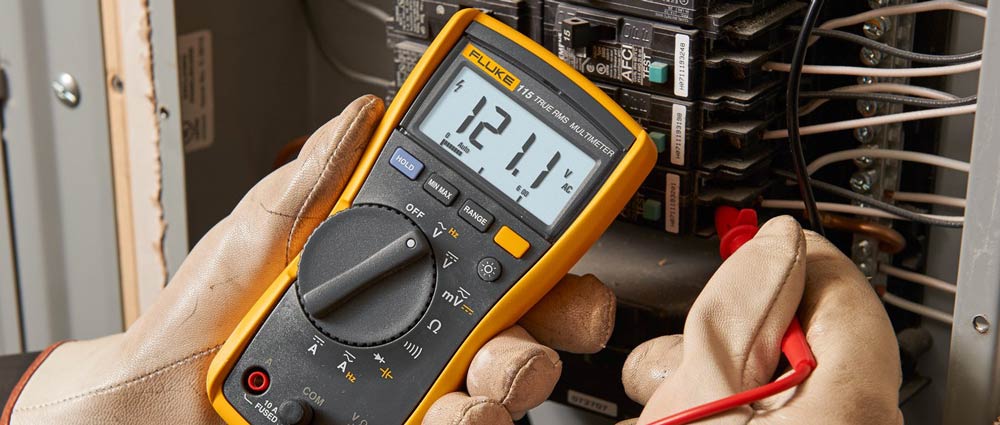
A good display can make all the difference when working with a multimeter, and both the Fluke 115 and Fluke 117 deliver in this area. They feature large backlit LCD screens, making it easy to read measurements even in dimly lit spaces like basements or electrical panels.
The 6,000-count display ensures precise readings, with clear digits and unit icons that eliminate guesswork. Whether you're measuring voltage, resistance, or current, the screen provides sharp, easy-to-read results.
Navigating the multimeter is just as straightforward. Both models use an intuitive rotary dial, allowing you to quickly switch between measurement modes without hassle. The layout is designed for efficiency, keeping essential functions within easy reach.
For added convenience, a responsive bar graph provides real-time tracking of fluctuations. This feature is particularly useful when working with rapidly changing signals, helping users get a more detailed view of variations in their measurements.
Measurement Capabilities
Both the Fluke 115 and Fluke 117 offer a wide range of measurement functions, making them reliable tools for both professionals and DIY users. They can measure AC/DC voltage up to 600V, AC/DC current up to 10A (with a 20A surge for short periods), as well as resistance, continuity, frequency, and capacitance.
To ensure precise and reliable readings, both models use True RMS technology, which delivers accurate measurements even on non-linear loads. This is especially useful when working with modern electronic devices, power supplies, and HVAC systems.
For added convenience, both multimeters feature auto-ranging, allowing users to switch between different measurements without manually adjusting the range. This helps streamline troubleshooting and makes the devices more user-friendly.
Accuracy Breakdown
When it comes to accuracy, both models are nearly identical, with precise readings across voltage, current, resistance, and capacitance. They share the same 6,000-count display, ensuring clear and detailed measurement outputs.
Here’s how they compare:
- Voltage Accuracy (DC): ±0.5% + 2 counts
- Current Accuracy (DC): ±1.0% + 3 counts
- Resistance Accuracy: ±0.9% + 1 count
- Capacitance Accuracy: ±1.9% + 2 counts
Both models provide professional-grade precision, making them suitable for a variety of electrical tasks. The key difference lies in the Fluke 117’s additional features, which are designed for electricians working in demanding environments.
Special Features
While both the Fluke 115 and Fluke 117 offer reliable measurement capabilities, the key difference lies in their specialized features. Each model is designed with specific users in mind, catering to different electrical tasks.
Fluke 115
The Fluke 115 is a solid choice for field service technicians and general-purpose electrical work. It includes diode testing for checking semiconductor components and a MIN/MAX/AVG recording function, which helps track signal fluctuations over time. These features make it a great tool for diagnosing electrical issues in a variety of applications.
Fluke 117
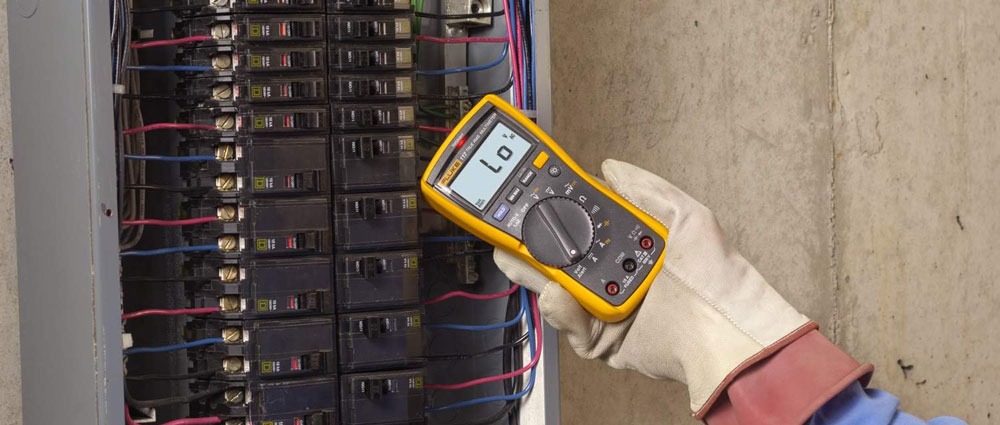
The Fluke 117 takes things a step further with advanced features designed specifically for electricians working in commercial and industrial settings.
- VoltAlert™ Technology allows for non-contact voltage detection, making it easy to identify live circuits without needing to touch a wire.
- Auto-Volt/LoZ Mode automatically selects AC or DC voltage and includes a low impedance (LoZ) function to prevent false readings from ghost voltages, improving measurement accuracy.
These extra features make the Fluke 117 a better fit for professionals who need added safety and efficiency when working with electrical systems.
Safety Ratings
When working with electricity, safety is a top priority, and both the Fluke 115 and Fluke 117 are designed with that in mind.
CAT III 600V Rating
Both models carry a CAT III 600V safety rating, meaning they are built to handle electrical installations up to 600 volts in industrial, commercial, and residential environments. This ensures they can safely be used in panel work, circuit troubleshooting, and other high-energy applications.
Protective Features
Fluke multimeters are known for their built-in safeguards to protect users from electrical hazards. Both models include overload protection, helping prevent damage in case of unexpected voltage spikes. The rugged casing and protective holster add an extra layer of durability, ensuring these meters hold up in demanding work conditions.
Whether you're a technician, electrician, or a DIY enthusiast, both the Fluke 115 and Fluke 117 provide the safety and reliability needed for electrical testing.
Applications and Suitability
Both the Fluke 115 and Fluke 117 are excellent choices, but their ideal users differ based on specific needs and work environments.
Fluke 115
The Fluke 115 is a great all-around multimeter, making it ideal for field service technicians, trainees, and home electrical enthusiasts. It’s well-suited for general-purpose electrical and electronic testing, whether you're troubleshooting household wiring, checking automotive circuits, or working with low-voltage systems. Its user-friendly design and essential measurement functions make it a reliable choice for a wide range of applications.
Fluke 117
If you work in commercial, industrial, or institutional settings, the Fluke 117 is the better fit. Designed with electricians in mind, this model is commonly used in commercial buildings, hospitals, and schools, where additional safety and efficiency features are needed.
With its non-contact voltage detection (VoltAlert™) and low impedance (LoZ) mode, the Fluke 117 is particularly useful in environments where preventing false readings from ghost voltages is crucial. These added functions make it a top choice for professionals who need a multimeter that goes beyond basic electrical testing.
Final Thoughts
Both the Fluke 115 and Fluke 117 are high-quality, reliable multimeters, but the right choice depends on your needs. The Fluke 115 is perfect for general electrical work, offering all the essential functions in a user-friendly design. On the other hand, the Fluke 117 is built for electricians who need added features like non-contact voltage detection and LoZ mode for professional environments.
If you’re looking for a solid all-purpose multimeter, go with the Fluke 115. If you need extra safety and efficiency for demanding electrical work, the Fluke 117 is worth the upgrade.

Nerko is a writer for Zoopy, and he's been working there since 2019. He loves to ride his motorcycle and bicycle, especially in the summertime! He also enjoys watching science fiction movies, and his favorite movie is Interstellar. Nerko is also a competitive gamer - so if you're looking for a good competition, he's your man!